Unleash Your Creative Flow with the Paintbrush Font
Every designer has faced that moment where a project feels technically perfect but emotionally flat. You’ve balanced your grids, selected a reliable sans serif font for the body copy, and used a standard serif font for the headlines. It looks professional, sure, but it lacks that specific spark that grabs a viewer by the collar. This is usually the point where we start digging through our library for a premium font that offers a bit more soul. If you are searching for a typeface that bridges the gap between polished design and raw human expression, you need to take a closer look at Paintbrush.
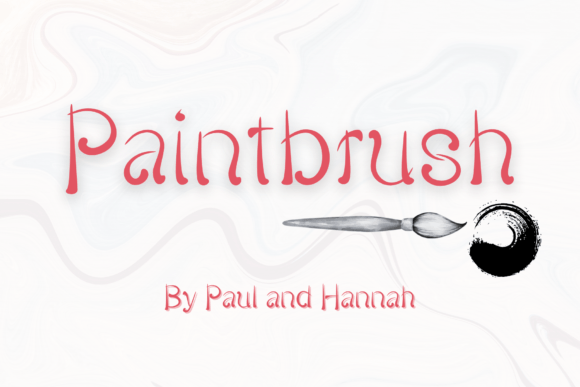
As the name suggests, Paintbrush is a creative font deeply rooted in the tactile aesthetics of ink and pigment. It doesn't just mimic handwriting; it mimics the physical act of painting. You can see the variation in stroke width, the texture of the bristles, and the slight imperfections that occur when ink hits paper. It is a script font that carries a distinct personality—energetic, artistic, and undeniably authentic. It avoids the overused calligraphy tropes and instead offers a modern, edgy take on the handwritten font style.
The Anatomy of Authenticity
When we talk about the visual characteristics of Paintbrush, we are looking at a masterclass in movement. Unlike rigid geometric typefaces, this font feels fluid. The terminals of the letters often end in sharp, tapered points or rough edges, mimicking the effect of a dry brush technique. This gives the text a kinetic energy that static fonts simply cannot achieve. It is a versatile asset because it manages to be loud without being overwhelming. Whether you are working on a logo design for a streetwear brand or packaging for an artisanal coffee shop, the texture of the font adds an instant layer of perceived quality and craftsmanship.
The appeal of Paintbrush lies in its ability to evoke emotion immediately. In modern typography, we are seeing a shift away from sterile perfection. Audiences are craving connection and humanity in the brands they support. A display font like Paintbrush signals that a brand is approachable and creative. It tells the viewer that there is a human behind the design. This is particularly useful in industries like wellness, food, fashion, and entertainment, where personality is a key selling point.
Strategic Applications for Maximum Impact
Knowing a font exists is one thing; knowing how to deploy it effectively is another. As a design asset, Paintbrush is incredibly potent, but it requires a strategic approach to maintain readability and hierarchy.
Branding and Identity
For entrepreneurs and small business owners, your brand identity is your handshake. Using Paintbrush in your primary logo or wordmark can set you apart from competitors using generic system fonts. It works exceptionally well for creative agencies, boutique studios, and lifestyle brands. However, because it is a display font, it demands space. It needs to breathe. If you try to crowd it into a tight logo mark, you’ll lose the nuance of the brushstrokes. Use it for the main logo and pair it with a clean, geometric sans serif font for supporting text to ensure your business cards and letterheads remain legible.
Digital Presence and Web Design
In the realm of web design, Paintbrush is your secret weapon for headlines and hero sections. Large-scale typography is a dominant trend, and a font with this much texture looks stunning at 60px or 80px. It draws the eye immediately and sets the tone for the user experience. However, avoid using it for body copy. Extended reading in a script or handwritten font can cause eye strain. Instead, use it for H1 and H2 headers to create a strong visual hierarchy, then switch to a highly legible serif or sans-serif for the paragraphs.
Publishing and Editorial Design
For bloggers and publishers, the title is often the deciding factor in whether a reader clicks. Paintbrush adds a layer of intrigue to blog headers, magazine covers, and chapter titles. It suggests that the content within is creative and thoughtful. If you are designing a book cover, this font can convey genre instantly—whether it’s a gritty thriller or a heartfelt memoir, the brushstroke style adapts to the mood based on color and sizing.
Social Media and Marketing
Social media is a visual battlefield. To stop the scroll, you need graphics that feel dynamic. Paintbrush is perfect for social media graphics because it mimics the informal, quick-turnaround nature of platforms like Instagram and TikTok. Use it for quotes, announcements, or call-to-action overlays on images. Because it looks like it was made by hand, it feels less like an advertisement and more like a personal note, which can significantly boost engagement rates.
Mastering Font Pairings and Hierarchy
The true power of a creative font is realized when it is paired correctly. Because Paintbrush has a high degree of visual complexity and texture, it pairs best with simpler, neutral typefaces. This creates a contrast that is pleasing to the eye.
Try pairing Paintbrush with a clean, wide-set sans-serif like Montserrat or Roboto. The structural rigidity of the sans-serif will anchor the fluid, organic nature of the brush font. Alternatively, if you want a more classic, editorial look, pair it with a transitional serif font. The key is to avoid pairing it with other decorative fonts, which will result in a chaotic, unreadable mess. You want the viewer to focus on one "loud" element at a time.
Practical Guidance for Implementation
Before you dive into your next project, there are a few practical considerations to keep in mind when working with Paintbrush.
- Licensing and Usage: Always verify the licensing terms. If you are using this for a client’s logo design or merchandise, ensure you have the appropriate commercial font license. Most premium fonts have different tiers for desktop use versus web embedding (WOFF/WOFF2 files).
- Testing for Readability: Always test your color combinations. A textured font like Paintbrush can lose definition if the contrast is too low. High-contrast pairings (black on white, or white on dark navy) usually work best to highlight the brush details.
- Kerning and Spacing: Script fonts often require manual kerning adjustments, especially between specific letter pairs. Don't rely entirely on the font's default metrics. Zoom in and check the spacing between letters to ensure the flow feels natural and connected.
- Color and Texture: Don't be afraid to apply textures or gradients to the font itself. Since it is inspired by paint, adding a subtle noise texture or a watercolor effect to the text can amplify the realism of the design.
Ultimately, Paintbrush is more than just a set of vector paths; it is a mood enhancer. It brings a human touch to digital interfaces and a creative flair to print materials. Whether you are a seasoned designer looking to refresh your toolkit or a small business owner trying to build a memorable brand identity, this font offers the perfect blend of artistic expression and functional versatility. By understanding its strengths and respecting its intensity, you can use Paintbrush to create work that doesn't just look good, but feels alive.