Mushroom Outline: Whimsy Meets Typography
A Typeface That Brings Nature to Your Design Table
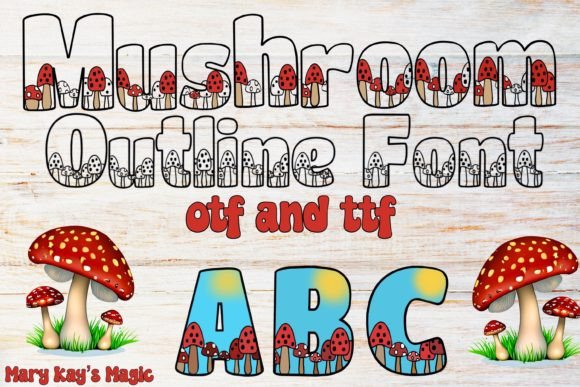
If you've ever wanted to inject a bit of forest-floor magic into your creative projects, the Mushroom Outline typeface is a standout choice. This isn't your standard, run-of-the-mill display font. At its core, it's a playful, curvy typeface where tiny, detailed mushroom illustrations are nestled into the negative space or structure of each character. The letters themselves have a soft, rounded quality, avoiding harsh corners in favor of a friendly and approachable feel. Each mushroom adds a subtle pop of color and an unexpected layer of charm, making the font itself a miniature piece of art. It's a creative font that feels both handcrafted and intentional, perfect for designs that need to communicate warmth, whimsy, and a connection to the natural world.
Where This Creative Font Truly Shines
Understanding where to deploy a font like Mushroom Outline is key to leveraging its strengths. Its personality is unmistakable, so it works best in contexts where that playful, organic vibe is an asset, not a distraction. Think of it as a specialty tool in your design assets toolkit, rather than a workhorse for body text.
Children's Publishing & Editorial Design: This is its sweet spot. For book covers, chapter titles, and pull quotes in children's literature, nature journals, or whimsical magazines, Mushroom Outline immediately sets a storybook tone. It pairs beautifully with a clean, simple serif font or a gentle sans serif font for the body copy, ensuring the main text remains highly readable while the headings capture the imagination.
Branding & Logo Design: For businesses that want a friendly, artisanal, or eco-conscious brand identity, this font can be a secret weapon. Imagine it used for a local organic bakery, a children's boutique, a botanical garden's signage, or a craft brewery with a foraging theme. In logo design, it can work as a logomark or as part of a wordmark for a brand name, instantly communicating a specific personality. The key is to ensure the brand's core message aligns perfectly with the font's playful character.
Digital & Social Media Presence: On social media graphics, this font can stop the scroll. It's ideal for Instagram post titles, Pinterest pin headers, or YouTube thumbnails for channels focused on gardening, crafting, parenting, or fantasy storytelling. In web design, use it sparingly for impactful elements like a homepage hero statement or a call-to-action button to draw attention without overwhelming the user experience. Its outline style ensures it doesn't feel too heavy or blocky on screen.
Packaging & Product Design: For packaging design, especially for artisanal goods, cosmetics with natural ingredients, or specialty food items, Mushroom Outline adds a distinct touch of handcrafted appeal. It can elevate a label from simple to memorable, suggesting that care and creativity went into the product inside.
Making It Work: Practical Guidance for Designers
Adopting a distinctive font like this requires a bit of strategy. Here’s how to integrate it effectively into your workflow.
Evaluating Project Fit: Before you commit, ask yourself: does this project's tone match the font's personality? Mushroom Outline is joyful and specific. It might not suit a corporate law firm's annual report, but it's perfect for a indie game's UI or a festival poster. Always consider your audience. For a project targeting adults in a serious B2B context, it's likely the wrong choice. For one targeting parents, hobbyists, or a community with a shared interest in nature or fantasy, it's a strong contender.
Mastering Font Pairing: This is critical. Because Mushroom Outline is a strong display font, it demands a more neutral partner. Avoid pairing it with another highly decorative font, script font, or handwritten font, as that will create visual chaos. Instead, opt for balance. A sturdy, clean sans serif font like Montserrat or Lato provides a modern, readable counterpoint. A classic serif font like Georgia or Lora can add a touch of elegance and stability. The goal is to let the Mushroom Outline typeface be the star of the show while its partner handles the heavy lifting of body text.
Readability & Hierarchy: This font is designed for headlines and short bursts of text, not for long paragraphs. Using it at small sizes or for lengthy sentences will compromise readability and dilute its visual impact. Use it for H1, H2, or H3 headings, logos, and call-outs. For body copy, always default to a highly legible font. This creates a clear visual hierarchy: the whimsical headings draw the reader in, and the clean body text keeps them reading comfortably.
Understanding the Package: When you acquire a premium font like this, review the full character set. Does it include numerals, punctuation, and accented characters? Are there multiple styles or weights? Knowing what's included helps you plan its application across all your design assets, from print to digital, ensuring consistency.
Licensing for Commercial Use: This is non-negotiable. If you're using Mushroom Outline for any project that generates revenue—a client's logo, merchandise, a monetized blog, or commercial packaging—you must ensure you have the proper commercial license. Font licensing protects both the creator and you, the user. It's a small investment for a significant design asset that can define a brand's look and feel.
In the crowded landscape of modern typography, finding a font with genuine character is a win. Mushroom Outline offers a specific, joyful aesthetic that can elevate the right project from good to unforgettable. It’s a tool for storytellers, brand builders, and creators who aren’t afraid to let a little whimsy peek through their work. Used thoughtfully, it doesn't just spell out words—it cultivates an entire mood.