Omar: A Premium Font for Ornate & Cultural Design
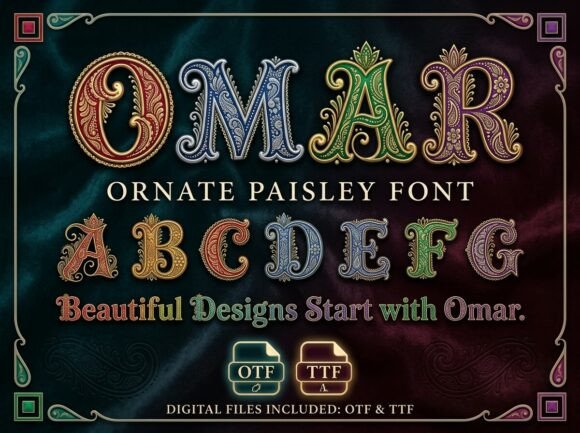
When you first encounter the Omar typeface, it’s clear this isn’t just another display font. It’s a piece of art. Every character in the Omar premium font collection is a detailed canvas, filled with the intricate swirls and floral motifs of traditional paisley patterns. This creative font is designed to evoke a sense of heritage and luxury, making it a powerful tool for specific, high-impact projects. If your work involves cultural storytelling, luxury branding, or editorial design that demands a textured, hand-crafted feel, understanding how to use Omar effectively can elevate your final product significantly.
Visual Personality and Where It Shines
The core appeal of Omar lies in its vibrant, multi-color palette and jewel-toned aesthetic. This isn't a subtle serif font for body text or a clean sans serif font for user interfaces. It’s a statement piece. Its personality is bold, decorative, and deeply rooted in visual tradition. This makes it an exceptional choice for contexts where first impressions are everything and where you want to convey richness and attention to detail.
Consider its strength in logo design for brands connected to artisanal crafts, luxury textiles, or cultural experiences. A single, well-set wordmark using Omar can communicate quality and heritage instantly. In packaging design, it can transform a product label for gourmet spices, high-end teas, or boutique cosmetics into something that feels precious and collectible. For editorial design, think beyond the body copy. Omar excels as a drop cap, a chapter title in a book about art history, or a headline for a magazine feature on global fashion. Its intricate details reward close inspection, making it perfect for these focal points.
Practical Application: Beyond the Aesthetic
Using a decorative font like Omar successfully requires more than just liking how it looks. You need to consider its real-world function. Its primary role is to grab attention and set a specific tone, not to convey long paragraphs of information. Readability at small sizes is a common challenge with highly detailed typefaces. Therefore, Omar should be used sparingly—as a headline, an initial, or a logo element—and paired with a highly legible companion font.
A strong font pairing is crucial. Imagine Omar as the main headline on a wedding invitation. Pair it with a simple, elegant script font for the names and a clean, modern sans serif font for the details. This creates a clear visual hierarchy: Omar commands attention, the script adds personal touch, and the sans serif ensures all the logistical information is easy to read. This approach maintains the luxurious feel while ensuring the design is functional and professional. Testing these pairings in your actual layout is non-negotiable; what looks good in a font preview may behave differently in context.
Integrating Omar into Your Brand and Projects
For entrepreneurs and marketers building a brand identity, consistency is key. If Omar aligns with your brand’s story—perhaps for a boutique hotel, a jewelry designer, or a cultural festival—establish clear guidelines for its use. Define it as your primary display typeface for all major headings in print and digital assets, from your website hero sections to your social media graphics. This consistency builds recognition and reinforces the premium, artisanal perception you're aiming for.
When selecting this commercial font, always review the full character set and licensing. Does it include the ligatures, alternates, and multilingual support you need? Is the license suitable for your intended use, whether it’s for a client project, merchandise, or a digital product? Understanding these details upfront prevents issues later. For web design, consider performance; while Omar can make a stunning hero statement, ensure it’s optimized or used as a static image if load times are a concern.
Ultimately, Omar is more than just a typeface; it’s a design asset for storytelling. It’s for the creator who needs to infuse a project with a specific, textured emotion—be it opulence, tradition, or artistic flair. By applying it thoughtfully, respecting its strengths and limitations, and pairing it wisely, you can harness its intricate beauty to create work that feels both luxurious and genuinely crafted. It’s a specialized tool in your modern typography toolkit, and when used for the right job, the results are unmistakable.