Pop Into Your Next Project with the Butterpop Font
When a design needs to feel alive, typography does more than deliver a message—it sets the entire mood. Some typefaces whisper professionalism, others scream urgency, and then there are those, like the Butterpop font, that radiate pure, unadulterated fun. If you’ve been searching for a display font that brings energy and movement to your work, you might have just found your new go-to asset.
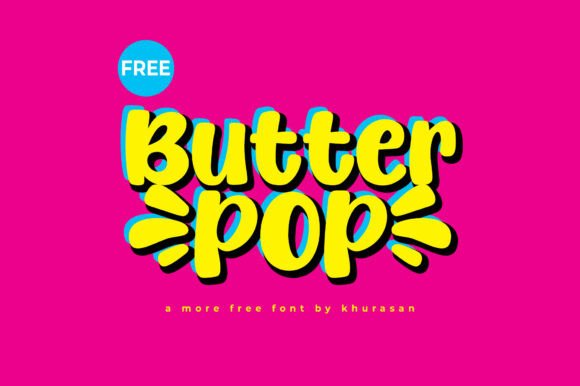
At its core, Butterpop is a high-energy display typeface designed to capture attention instantly. Unlike the rigid neutrality of a standard sans serif font or the traditional elegance of a serif font, Butterpop features thick, bouncy letterforms that seem to dance on the page. The defining characteristic of this typeface is its playful "motion sparks"—subtle accents that give the impression of speed, excitement, and vibration. It’s not just a static set of letters; it’s a visual representation of joy.
Visual Characteristics and Personality
The "personality" of a font is often an abstract concept, but with Butterpop, it is immediately tangible. The letterforms are heavy and substantial, ensuring that this premium font maintains maximum legibility even when placed against busy, textured, or photographic backgrounds. This thickness is crucial for modern web design and social media graphics, where text often has to compete with dynamic imagery and short attention spans.
However, what prevents the font from feeling blocky or heavy is its inherent bounce. The baseline shifts slightly, and the curves feel organic rather than mechanical. This creates a "butter-smooth" flow that softens the impact of the heavy weight. It strikes a balance between the robustness needed for packaging design and the whimsy required for toy branding. If your brand identity leans into a modern, pop-culture aesthetic, Butterpop fits naturally into that visual language.
Where Butterpop Shines: Practical Applications
Understanding where a font works best is just as important as liking how it looks. In my experience, display typefaces with this much character have specific zones where they excel, and others where they should be used sparingly. Here is where Butterpop truly shines:
- Snack Packaging and Food Branding: The name itself suggests something delicious. The thick silhouette and energetic vibe make it perfect for candy wrappers, chip bags, or fast-casual branding. It communicates flavor and fun before the customer even reads the product name.
- Logo Design and Brand Identity: For startups targeting a younger demographic or brands aiming for a playful rebrand, this font offers a strong foundation. It works exceptionally well for logo design in the entertainment, gaming, or children's education sectors.
- Digital Media and YouTube: Thumbnails and banners need to pop. Using Butterpop for a YouTube banner or a podcast cover ensures that your channel looks energetic and inviting. It pairs well with neon gradients and 3D text effects, which are trending heavily in current web design.
- Event Flyers and Posters: Whether it’s a local fair, a birthday party, or a concert, the font’s high legibility ensures that event details are readable from a distance while maintaining a festive atmosphere.
Design Strategy: Pairing and Hierarchy
Using a creative font like Butterpop requires a bit of strategy. Because it has such a strong personality, it rarely plays well with other loud fonts. You wouldn’t want to pair it with a complex script font or a decorative handwritten font, as that would create visual chaos.
Instead, let Butterpop do the heavy lifting for your headlines and display text. For body copy or secondary information, balance it with a clean, geometric sans serif font. The simplicity of the sans serif will provide a resting place for the eyes, allowing the Butterpop headers to stand out without overwhelming the viewer. This contrast is the secret to professional editorial design and layout.
Furthermore, consider your color palette. Butterpop practically begs for high contrast. Think neon pinks against dark charcoal, or bright yellows against electric blues. The font’s "motion sparks" become much more visible and effective when there is a distinct color separation between the text and the background.
Technical Usability and Licensing
A beautiful font is useless if it’s difficult to work with. One of the practical advantages of the Butterpop font is its PUA encoding. For those not deep into the technical side of modern typography, this means the entire character set—including special symbols and stylistic alternates—is fully accessible. You don't need specialized design programs like Adobe Illustrator with OpenType features enabled to access the extra glyphs; you can use standard character maps on Windows or Mac.
This accessibility makes it a fantastic design asset for a wide range of users, from professional designers in agencies to small business owners using Canva or Photoshop for their own marketing materials.
When incorporating any commercial font into your work, always review the licensing terms. Ensure that the license covers your specific usage, whether that is for physical products (like merchandise), digital ads, or social media graphics. Most premium font licenses are flexible, but it is always due diligence to check for "desktop" vs. "web" vs. "app" licensing if you are building digital products.
Final Thoughts on Font Selection
Choosing the right typeface is a subjective process, but it should also be a strategic one. Ask yourself: Does the personality of this font align with the message I want to send? If your goal is to appear serious, corporate, and traditional, Butterpop is likely the wrong choice. However, if you are aiming for approachability, excitement, and a modern edge, this typeface is an incredibly strong contender.
It bridges the gap between professional design assets and accessible, fun graphics. Whether you are a crafter looking to spice up a project, a marketer designing a campaign for a new snack, or a content creator building a personal brand, Butterpop provides the visual "pop" needed to stand out in a crowded digital landscape.