Sweet Donut: A Creative Font for Fun & Whimsical Designs
If you’ve spent any time scrolling through social media or browsing the shelves of a boutique, you’ve likely noticed a shift in design trends. The rigid, corporate look of the last decade is softening, making way for aesthetics that feel more human, playful, and approachable. This is where typography plays a massive role. Enter Sweet Donut, a premium font that doesn’t just sit on the page—it bounces, swirls, and invites the viewer in. It’s a modern typography choice that bridges the gap between professional polish and lighthearted fun, making it a versatile tool in your creative arsenal.
But what exactly makes a font like this work? And more importantly, how do you use it without losing credibility or overwhelming your audience? Whether you are a designer, a small business owner, or a content creator, understanding how to harness the energy of a creative font like Sweet Donut can be the secret weapon to standing out in a crowded market.
The Anatomy of Whimsy: Visual Style and Personality
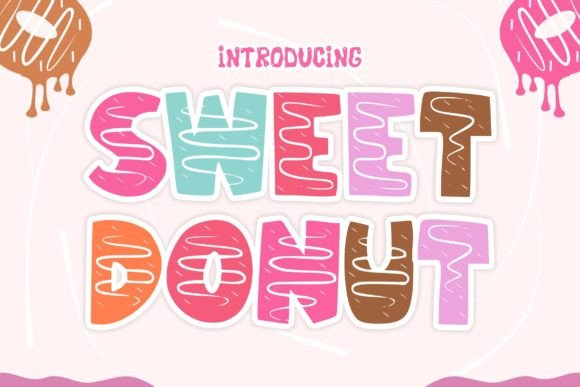
At its core, Sweet Donut is a display font that leans heavily into a rounded, bubbly aesthetic. It isn't just another handwritten font; it possesses a structural integrity that keeps it legible while maintaining that hand-crafted charm. The letterforms feature soft edges and consistent weight, mimicking the look of smooth frosting or inflated balloons. This gives the typeface a tactile quality—when you look at it, you almost want to touch it.
Unlike traditional serif fonts that command authority or rigid sans serif fonts that scream efficiency, Sweet Donut speaks a language of joy. It’s the typographic equivalent of a friendly smile. However, it’s important to note that this isn't chaotic whimsy. The character spacing (kerning) is balanced, ensuring that the text flows naturally. It avoids the common pitfall of many "fun" fonts where letters crash into one another, making sentences unreadable. This balance makes it a reliable design asset for projects that need to be eye-catching but still clear.
Strategic Applications: Where Sweet Donut Shines
The versatility of Sweet Donut allows it to adapt to various mediums, but knowing where to deploy it is key to effective visual hierarchy. Because it is a display font, it is engineered for impact, meaning it works best in short bursts of text—headlines, logos, and call-to-action buttons—rather than long-form body copy.
Branding and Packaging
For brand identity, specifically in industries like food, beauty, children’s products, or pet care, Sweet Donut is a powerhouse. Imagine a bakery logo or the packaging for a line of artisanal ice cream. This font instantly communicates flavor, fun, and indulgence. It helps build brand recognition because the typography itself becomes a memorable icon. If you are a small business owner looking to differentiate yourself from generic competitors, swapping a standard system font for Sweet Donut on your labels can drastically change how your product is perceived.
Digital Presence and Social Media
In the realm of web design and social media graphics, attention spans are short. Sweet Donut grabs the eye. It is perfect for Instagram stories, YouTube thumbnails, or website hero sections where you need to convey a message instantly. The font’s modern look pairs well with flat design illustrations and bright color palettes. It adds that necessary "pop" that encourages engagement and clicks, making your marketing materials feel less like an advertisement and more like an invitation.
Editorial and Publishing
Even in editorial design, there is a place for this typeface. Think of magazine headlines, book covers for young adult fiction, or the interior layout of a modern recipe book. Sweet Donut can break up the monotony of standard text blocks, guiding the reader's eye to key sections and adding personality to the page layout.
Technical Considerations: Pairing and Readability
Using a creative font effectively requires a bit of strategy, particularly regarding font pairing. Because Sweet Donut has such a distinct personality, it can easily clash with other decorative typefaces. The golden rule here is contrast. To maintain professionalism and readability, pair Sweet Donut with a clean, neutral sans serif font for your body text.
For example, if you use Sweet Donut for a headline on a poster, use a font like Helvetica, Open Sans, or Lato for the details. This creates a clear hierarchy: the display font draws the user in with emotion, and the sans serif delivers the information efficiently. This pairing ensures your design looks polished rather than chaotic.
Practical Guidance for Implementation
Before integrating Sweet Donut into your next project, consider these practical tips:
- Evaluate the Fit: Does your brand voice match the font's personality? Sweet Donut works for "fun" and "approachable" brands, but might not be the best fit for a law firm or a luxury watch brand.
- Test for Readability: Check the legibility at different sizes. While it’s a premium font, always test how it renders on mobile screens versus desktop monitors.
- Review Licensing: Ensure you have the correct commercial font license for your specific use case, whether that is for merchandise, digital ads, or software embedding.
- Check Stylistic Alternatives: Many modern fonts include alternate characters. Explore if Sweet Donut offers different glyphs that might better suit your specific layout.
Ultimately, typography is about communication. Sweet Donut allows you to communicate with warmth and energy. By using it strategically, you can elevate your logo design, energize your packaging design