Ella: A Premium Calligraphy Font for Heritage Branding
The Soul of Hand-Inked Lettering
There's a particular quality to freshly dried fountain pen ink that digital type often misses. It's in the subtle swell of a downstroke, the slight imperfection that proves a human hand was involved, the way light plays across a serif that thickens and thins with organic rhythm. Ella captures this with remarkable precision. This isn't a script font that merely approximates cursive—it's a premium calligraphy typeface built around the actual mechanics of a broad-nib pen held at a consistent angle.
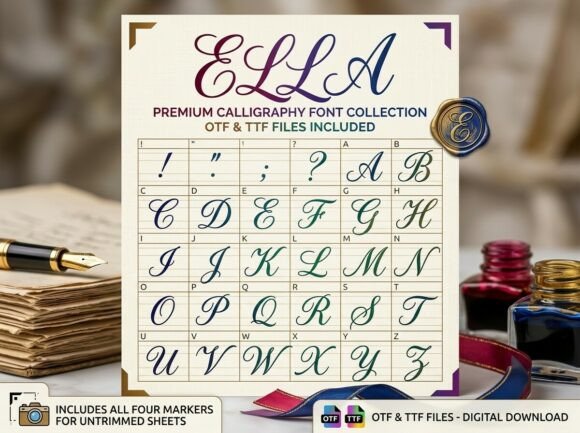
What makes Ella distinctive is its color transition. The strokes shift from deep midnight blues through forest greens into rich plums, mimicking the way ink pools and fades on quality paper. If you've ever watched someone write with a fountain pen and noticed how the wet ink catches light differently than the dried portions, you'll recognize that quality immediately in Ella's letterforms. The swells feel earned rather than decorative, and the overall texture has a scholarly warmth that reads as both timeless and intentional.
This typeface sits in a specific niche. It's not a casual handwritten font for quick social posts, nor is it a formal copperplate script for wedding invitations alone. Ella occupies the space where literary tradition meets contemporary design thinking—where a brand wants to signal craftsmanship, heritage, and intellectual depth without appearing stuffy or outdated.
Where Ella Finds Its Voice
Literary branding is where this typeface truly comes alive. Think about independent publishers launching a new imprint, an author building a personal brand around historical fiction, or a bookshop that wants its identity to whisper "we take reading seriously." Ella's rhythmic swells and ink-like character give these projects an immediate sense of gravitas. The font tells your audience, before they read a single word of copy, that something thoughtful and carefully made awaits them.
Historical editorial projects benefit enormously from this kind of typeface. Magazine features about heritage crafts, museum exhibition catalogs, archival photography collections, or documentary companion pieces all gain authenticity when the typography echoes the subject matter. Ella doesn't just set text—it contextualizes it. A feature article about Renaissance art printed in Ella feels different from the same article in a standard serif font. The lettering itself becomes part of the storytelling.
Upscale menu design is another natural fit. High-end restaurants, boutique wine bars, artisan chocolatiers, and specialty tea houses often struggle with typography that feels premium without being pretentious. Ella threads that needle beautifully. Its forest green and plum undertones suggest richness and depth, while the calligraphic flow keeps things approachable. A tasting menu set in Ella feels curated rather than corporate, handcrafted rather than mass-produced.
Personalized stationery remains one of the strongest applications. Custom letterheads, correspondence cards, monogram sets, and bespoke invitations gain tremendous character from a typeface that genuinely resembles penmanship. The key advantage here is consistency—something a real calligrapher would charge significantly more to achieve across a full stationery suite. Ella delivers that hand-inked look with the reliability of a digital font file.
How Typography Shapes Perception
Font choice influences how people receive your message before they process a single word. This isn't abstract design theory—it's measurable behavior. Studies on typographic perception consistently show that readers assign personality traits to typefaces within milliseconds. A premium font like Ella signals care, intention, and investment. When someone encounters your brand identity set in a typeface with this level of craft, they unconsciously assume the same qualities apply to your products or services.
Visual hierarchy benefits from Ella's design as well. The dramatic thick-thin contrast inherent in calligraphic letterforms creates natural emphasis. Headlines set in Ella pull the eye immediately, establishing a clear reading order on the page or screen. This makes it an effective display font for hero sections, pull quotes, and section headers, even when paired with a more neutral body typeface. The contrast between Ella's expressive strokes and a clean sans serif font for body copy creates a sophisticated tension that keeps layouts visually interesting without sacrificing readability.
Brand recognition improves when typography is distinctive and consistent. Generic fonts produce generic impressions. A typeface like Ella—recognizable but not overused—gives your brand a visual signature that audiences begin to associate specifically with you. Over time, that association builds trust and recall. People see the letterforms and already know what kind of experience to expect from your content, packaging, or communications.
Working With Ella in Practice
Before committing to any creative font for a project, test it in context. Set your actual headline copy, not just "Lorem ipsum." Evaluate how the specific letter combinations in your brand name or tagline interact. Some script and calligraphy fonts produce awkward joins between particular letter pairs—check that your key words look natural and balanced. Print a sample at the size you'll actually use. What looks elegant at display size can become illegible at small point sizes, so verify readability for your intended applications.
Font pairing deserves careful attention. Ella's personality is strong, which means it needs a partner that complements rather than competes. A geometric sans serif font with clean lines and generous spacing typically works well, providing a modern counterpoint to Ella's traditional warmth. Alternatively, a sturdy old-style serif font can reinforce the heritage feeling if that's your goal. Avoid pairing Ella with other expressive script fonts or highly decorative typefaces—the result tends to feel chaotic rather than layered.
Review the full character set before purchasing. Check for the specific glyphs your projects require: numerals, punctuation marks, currency symbols, accented characters for multilingual support, and any OpenType alternates that might expand your design options. A premium font should offer comprehensive coverage, but assumptions lead to frustration. Verify that the included styles—whether that's regular weight, bold, italic, or stylistic alternates—align with your actual needs.
Readability considerations matter more than aesthetics in many contexts. Ella excels as a display font for headlines, logos, and short phrases, but extended paragraphs of body copy set in a calligraphic typeface typically fatigue readers quickly. Use Ella strategically—hero text, logo design elements, packaging design accents, social media graphics headers—and let a more neutral typeface handle longer reading passages. This approach maintains the visual hierarchy while keeping your audience comfortable.
Commercial licensing is non-negotiable for professional work. If you're using Ella for client projects, web design, product packaging, or any commercial application, ensure your license covers those specific use cases. Most commercial font licenses distinguish between desktop use, web embedding, app embedding, and server installation. Understand what you're purchasing. For design assets that will appear on products for sale or in materials that generate revenue, proper licensing protects both you and your clients legally, and it supports the type designers whose craft makes work like Ella possible.
A Final Thought on Choosing Your Tools
Not every project needs a display font with this much character. But when your brand identity, editorial concept, or design brief calls for something that feels genuinely crafted—something with the warmth of actual penmanship and the depth of thoughtfully formulated ink—Ella deserves serious consideration. The best modern typography decisions happen when designers match typeface personality to project personality with intention. Take the time to understand what Ella communicates, test it against your specific content, and let its strengths serve your vision rather than forcing it into contexts where simpler solutions work better. That thoughtful approach to font pairing and selection is what separates work that feels designed from work that merely looks decorated.